

Views: 0 Author: Site Editor Publish Time: 2026-01-21 Origin: Site
As a manufacturer with nearly two decades of experience in medical oxygen equipment, GIHOMO has focused on designing hard shell chambers that combine safety engineering, certified quality, and user comfort. In this article, we explain what a hard shell chamber is, how it works, how it differs from soft shell systems, and why models such as the Y1800 1.5ATA are widely used in professional oxygen therapy environments around the world.
Unlike inflatable or fabric-based chambers, a hard shell chamber is manufactured from solid structural materials such as reinforced steel or composite metal shells. This rigid structure allows the chamber to withstand significantly higher internal pressures while maintaining stable shape, precise sealing, and long-term structural integrity.
In clinical oxygen therapy, pressure level is not a minor technical detail. It directly determines how much oxygen can dissolve into the bloodstream and reach damaged tissues.
For GIHOMO, every hard shell chamber is designed around three core principles: pressure stability, system safety, and long-term operational reliability. This design philosophy ensures that the chamber performs consistently in daily clinical operation without compromising patient safety.
The working principle of a hard shell chamber is based on the relationship between pressure and oxygen solubility in the human body. Under normal atmospheric conditions, oxygen is transported mainly by hemoglobin in red blood cells. When pressure increases, oxygen can dissolve directly into plasma at much higher concentrations, allowing oxygen to reach tissues that may have limited blood supply.
A hard shell chamber creates this environment by sealing the chamber and gradually increasing internal pressure using a precision pressure control system. At the same time, high-purity oxygen is delivered through a dedicated breathing system so that the patient inhales oxygen-enriched gas under elevated pressure.
At GIHOMO, hard shell chambers are equipped with a water-cooled air conditioner and a 24V DC low-voltage power supply. This design minimizes electrical risk and ensures stable temperature control in a high-oxygen environment.
When pressure inside the chamber increases, oxygen dissolves more efficiently into the bloodstream according to physical gas laws. This increased oxygen availability improves cellular metabolism, accelerates tissue repair, and enhances immune function.
In a standard atmosphere, oxygen saturation is limited by hemoglobin capacity. In a pressurized hard shell chamber, dissolved oxygen in plasma increases dramatically, allowing oxygen to reach areas with poor circulation, such as damaged tissues, infected zones, or ischemic regions.
This mechanism is the foundation of hyperbaric oxygen therapy. It explains why stable pressure control is essential and why professional hard shell chambers are designed with high-precision pressure regulation systems.
The therapeutic benefits of a hard shell chamber extend across multiple medical fields. The ability to deliver high-pressure oxygen safely enables treatment of conditions that cannot be effectively managed with conventional oxygen therapy alone.
One of the most important benefits is accelerated wound healing. In chronic wounds where blood supply is impaired, oxygen delivery becomes the limiting factor in tissue repair. By increasing oxygen diffusion directly into plasma, hard shell chambers stimulate fibroblast activity, collagen synthesis, and new blood vessel formation.
Another key benefit is infection control. Certain bacteria thrive in low-oxygen environments. By increasing tissue oxygen tension, hyperbaric therapy inhibits anaerobic bacteria and enhances white blood cell function.
Hard shell chambers also reduce inflammation, improve mitochondrial function, and support neural recovery in selected neurological conditions.
In professional practice, hard shell chambers are used to:
Promote angiogenesis and microcirculation
Reduce tissue edema and inflammation
Accelerate bone and soft tissue healing
Support recovery after surgery or trauma
Enhance immune response against infection
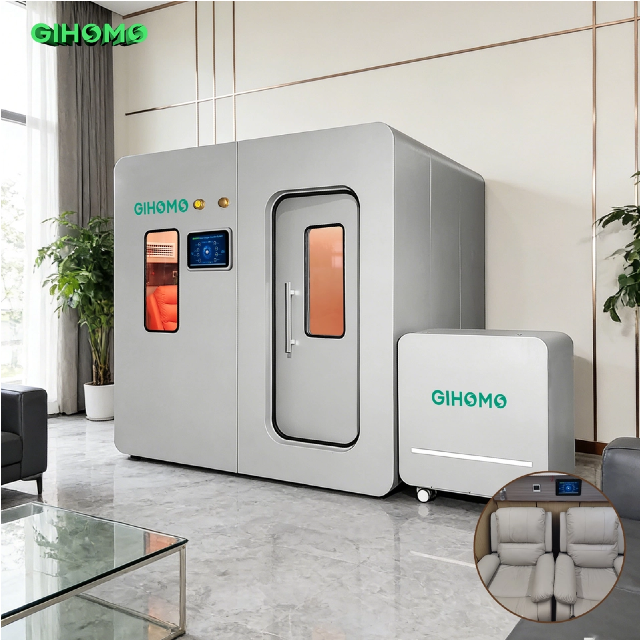
At GIHOMO, models such as the Y1800 1.5ATA are engineered specifically to deliver stable therapeutic pressure while maintaining a comfortable internal environment for the user. The sitting-type design allows easier entry and exit, which is especially important for elderly patients and rehabilitation users.
Safety is the defining characteristic of a professional hard shell chamber. High-pressure oxygen environments require strict control of every system component, from electrical circuits to ventilation design.
GIHOMO hard shell chambers are equipped with:
Multi-level pressure monitoring systems
Automatic pressure release valves
Oxygen concentration sensors
Low-voltage DC electrical systems
Fire-resistant internal materials
The use of a 24V DC power supply significantly reduces the risk of sparks or overheating. The integrated water-cooled air conditioner eliminates the need for fluorinated refrigerants, which could be dangerous in high-oxygen conditions.
A hard shell chamber represents the highest standard in professional hyperbaric oxygen therapy. Its rigid structure, stable pressure capability, certified safety systems, and advanced oxygen delivery technology make it the preferred solution for clinics and rehabilitation centers worldwide. At GIHOMO, we design and manufacture hard shell chambers such as the Y1800 1.5ATA with a clear mission: to deliver safe, effective, and reliable oxygen therapy equipment to rehabilitation centers across Europe, North America, the Middle East, and beyond.
If you are looking for a high-quality Hyperbaric Oxygen Chamber designed by an experienced manufacturer, we invite you to learn more about our products or contact us directly for technical consultation and customized solutions. Contact us today to discuss your professional oxygen therapy needs.
Q1: Why is a water-cooled air conditioner important in a hard shell chamber?
It ensures safe temperature control in a high-oxygen environment and avoids the risks associated with traditional refrigerants.
Q2: Can hard shell chambers be used for long-term rehabilitation programs?
Yes, they are widely used in long-term rehabilitation and recovery programs under professional supervision.


